01
Knee Osteoarthritis
Evaluation of pain, stiffness, mobility, joint mechanics, and activity limitations associated with osteoarthritis.

REGENESIS · Knee Decompression
Move With Less Knee Pain. Stay Active Longer.
Personalized, non-surgical knee care designed to reduce mechanical stress, improve movement tolerance, and support better function in appropriate patients with knee pain and osteoarthritis.
Your Daily Life
Knee pain and osteoarthritis can interfere with walking, stairs, exercise, golf, pickleball, travel, and everyday activity. When stiffness or discomfort changes how you move, an individualized evaluation can help clarify what may deserve attention next.
Individualized Evaluation
These concerns may be evaluated for conservative knee care, but not every knee problem is appropriate for decompression. Candidacy is determined from your history, examination findings, and individual needs.
01
Evaluation of pain, stiffness, mobility, joint mechanics, and activity limitations associated with osteoarthritis.
02
Assessment of movement, loading, and joint-mechanics factors that may be contributing to knee pain.
03
Evaluation of restricted motion and stiffness that may interfere with walking, stairs, exercise, or daily activity.
04
Personalized evaluation when knee symptoms limit golf, pickleball, exercise, travel, or other meaningful activities.
Controlled Mechanical Knee Traction
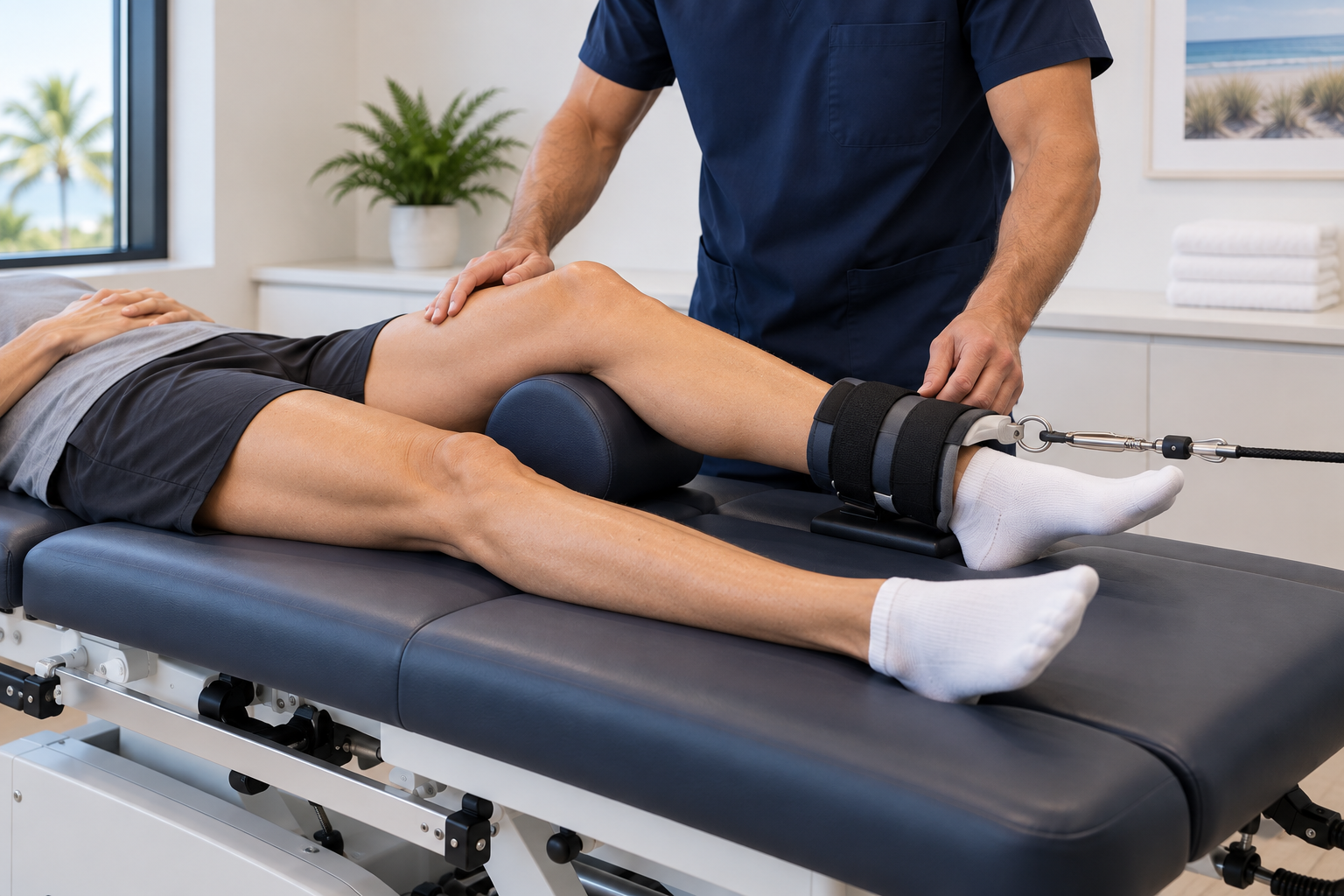
Knee decompression is a non-surgical form of controlled mechanical joint traction designed to gently unload the knee joint. Treatment is individualized according to the patient’s examination findings, comfort, mobility, and response to care. The goal is to reduce mechanical stress on the joint, improve movement tolerance, and help appropriate patients move and function more comfortably.
Doctor-Led Care
At REGENESIS, Dr. Michael McMurry uses a programmable Chattanooga Triton DTS traction system to provide controlled mechanical knee traction. Treatment setup and parameters are individualized based on clinical findings, comfort, and response.
Clinical Evidence
Research on mechanical knee traction is still developing. Clinical studies involving patients with knee osteoarthritis suggest that mechanical traction may help reduce pain and improve physical function in selected patients. Treatment protocols vary between studies and individual results vary.
Research protocols and individual responses vary.
A Clear Path Forward
Dr. McMurry reviews your symptoms, health history, movement, mobility, and functional goals.
Your examination findings help determine whether knee decompression may be appropriate or whether another next step is indicated.
Treatment setup and parameters are individualized to your comfort, mobility, findings, and response to care.
Your comfort, movement tolerance, and function are re-evaluated so care can be adjusted when appropriate.
The REGENESIS Approach
Relief. Restore. Rejuvenate.
Feel better now. Restore movement and function. Build physical capacity for the years ahead.
Frequently Asked Questions
Knee decompression uses controlled mechanical traction and is designed to be comfortable. The knee is positioned and supported while traction is gradually applied. Treatment settings are adjusted according to your comfort, examination findings, and response to care.
Selected patients with knee osteoarthritis, mechanical knee pain, stiffness, reduced mobility, or activity-related symptoms may be candidates. Your examination helps determine whether knee decompression is appropriate for your condition.
Treatment is designed to be controlled and comfortable. Dr. McMurry individualizes the setup and parameters and adjusts care based on your comfort and response.
Treatment recommendations vary according to your examination findings, goals, health history, and response to care. Dr. McMurry will explain the recommended plan after determining whether you are an appropriate candidate.
No. Knee decompression should not be presented as a treatment that regrows cartilage or reverses osteoarthritis. The goal is to reduce mechanical stress, improve movement tolerance, and support better comfort and function in appropriate patients.
Start with an individualized knee evaluation to determine whether this approach may be appropriate.